
How to Budget for Structural Repairs: Reserve Studies and Structural Evaluations for HOAs
Every HOA board eventually faces the same question. Our building has structural concerns, so what do we do now? Learning how to budget for structural repairs early can save your community money, stress, and risk.
In this guide, we explain how a reserve study and a structural integrity evaluation work together. We also answer a common board question: should we get an evaluation now, or wait?
Why Structural Repairs Are Hard to Plan
Roofs, paving, and paint wear out on fairly predictable schedules. Structural problems, however, often develop out of sight. Moisture, corrosion, and rot can work for years before anyone notices.
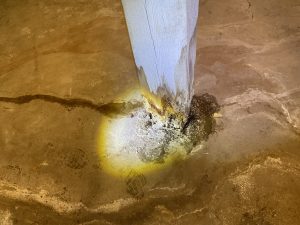
Take the photo above as an example. The base of this wood post sits directly on a concrete slab. Over time, moisture from the slab can wick into the wood. As a result, the post begins to decay where it carries its load. From a distance, it may look fine. Up close, however, the damage tells a different story.
Problems like this rarely appear in a standard reserve study. That’s because a reserve study is a budgeting tool, not an in-depth structural evaluation. Therefore, boards need both to plan with confidence.
Reserve Study vs. Structural Integrity Evaluation
These two services answer different questions. Together, however, they give your board a complete picture.
- A structural integrity evaluation asks: what condition is the overall structure in, and what needs repair?
- A reserve study asks: when will repairs happen, what will they cost, and how much should we save?
Best practice: First, a licensed engineer evaluates the structure. Then, the findings feed into your reserve study. As a result, your funding plan reflects the building’s real condition, not just its age.
Should We Get an Evaluation Now?
In most cases, yes. Here’s why waiting usually costs more:
- Deterioration keeps going whether or not anyone acts.
- Small repairs often turn into large, urgent ones.
- Emergency work costs more and leaves no time for competitive bids.
- Unplanned costs often lead to large special assessments.
In New Jersey, the law also sets clear expectations. The S2760 structural integrity law requires periodic structural inspections for covered buildings. It also requires associations to update their reserve study at least every five years.
So for many boards, the real question isn’t whether to act. Instead, it’s how to act wisely.
How to Budget for Structural Repairs: Step by Step
- Get a structural evaluation. A licensed Professional Engineer inspects the structure and identifies problems. In addition, the engineer ranks each issue by urgency.
- Separate urgent from long-term needs. Some issues need prompt action for safety. Others can be planned over several years.
- Estimate repair costs. Next, the engineer provides cost estimates for each recommended repair, or you can get quotes from local contractors.
- Update your reserve study. Then share the findings with your reserve study provider. This way, structural repairs become part of your long-term funding plan.
- Choose a funding strategy. Finally, the board decides how to pay for the work.
Funding Options for Structural Repairs
Most boards use one or more of these options:
- Reserve contributions: Gradually increasing monthly contributions spreads the cost fairly over time.
- Phased repairs: Scheduling work in stages helps balance safety needs with available funds.
- Special assessments: These cover large costs quickly. However, they can strain owners’ budgets.
- Association loans: Loans spread costs over time. Still, they add interest and require board approval.
Ideally, a reserve study shows several funding scenarios side by side. That way, the board can compare options and explain the choice to owners clearly.
What If Problems Are Urgent?
Sometimes an evaluation finds a safety concern. In that case, the engineer will recommend immediate steps. These may include temporary supports, restricted access, or prompt repairs.
Above all, don’t delay urgent safety work to protect the budget. Instead, address the safety issue first. Then update your reserve study to plan for the remaining work.
Communicating with Owners
Higher contributions are never popular. Even so, clear communication makes a big difference. Share the engineer’s findings, explain the risks of waiting, and show the funding options you considered.
When owners understand the reasons, they are more likely to support the plan. Moreover, full disclosure protects the board in meeting its fiduciary duty.
Plan Ahead with Criterium-Hanna Engineers
Criterium-Hanna Engineers offers both structural integrity evaluations and reserve studies. As a result, your board gets one clear plan from one experienced team.
Ready to learn how to budget for structural repairs in your community? Contact Criterium-Hanna Engineers to schedule your evaluation today.